
How To Stop Hairfall At Home With A Practical Daily Routine

A little daily shedding is normal, but a sudden spike in hairfall is unsettling — and the good news is that much of it responds well to steady, gentle care at home.
You May Also Love
This is a practical routine for the most common, reversible causes, plus clear signs for when it is time to get professional help.
Shedding or Breakage? Start Here
Before changing anything, work out what you are actually seeing. True shedding comes from the root, often with a tiny pale bulb on the strand. Breakage happens along the length and leaves short, uneven pieces.
Shedding points you toward the scalp, nutrition, and stress. Breakage points you toward gentler handling and less heat. Many people have a mix of both.
Quick Wins You Can Start Today
A few small changes take pressure off the hair immediately.
- Loosen tight ponytails, buns, and braids that pull at the hairline.
- Switch to a soft scrunchie and a silk or satin pillowcase.
- Pause tight extensions and give heat styling a rest.
- Detangle gently from the ends up with a wide-tooth comb.
Start With the Scalp
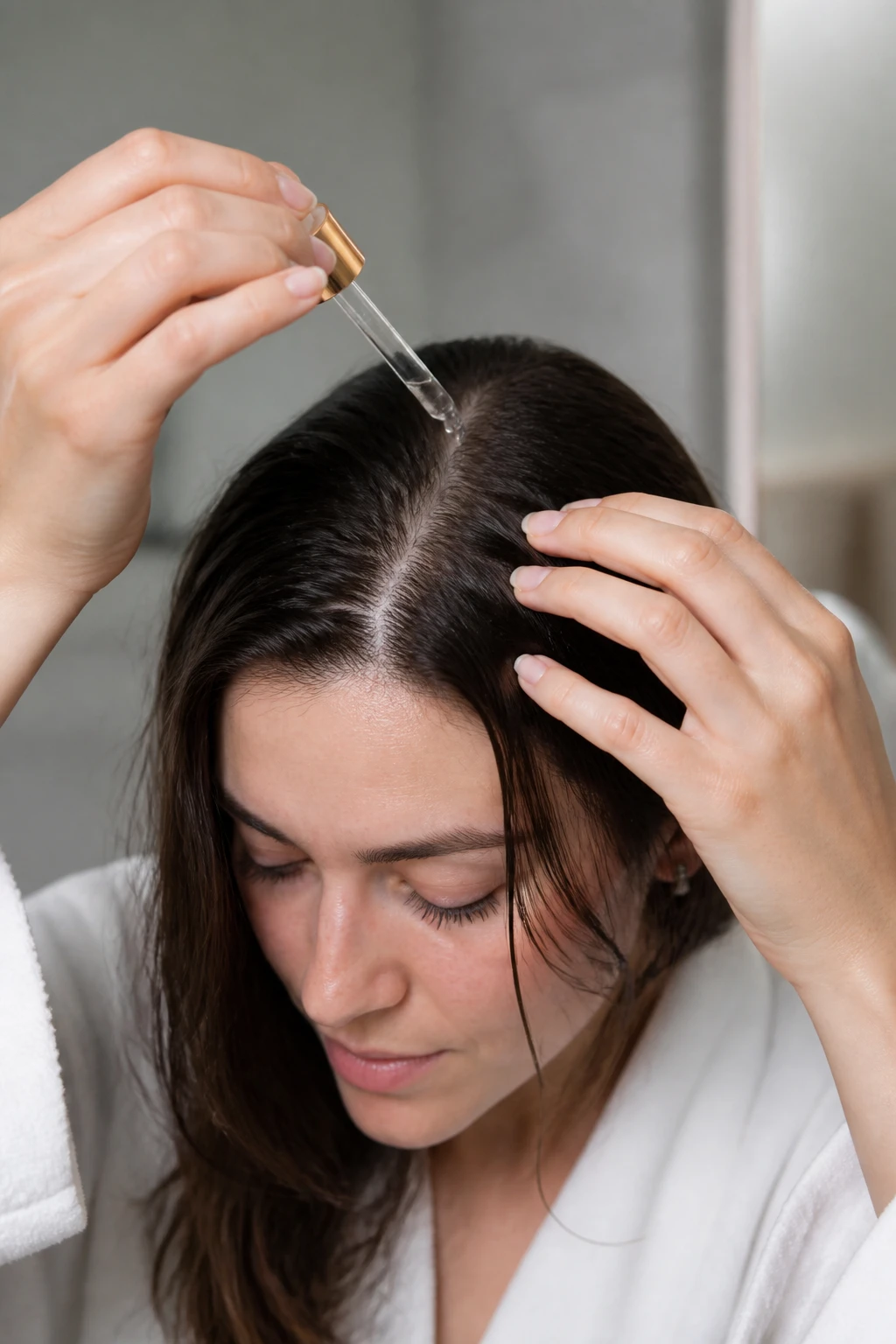
Healthy hair grows from a healthy scalp. Keep it clean but not stripped, and spend a couple of minutes a day on a fingertip massage to boost circulation to the follicles.
If your scalp is oily, flaky, or itchy, treat that first — buildup and irritation make shedding worse. A lightweight scalp serum or a gentle exfoliating wash once a week can help.
Wash, Protect, and Handle Gently
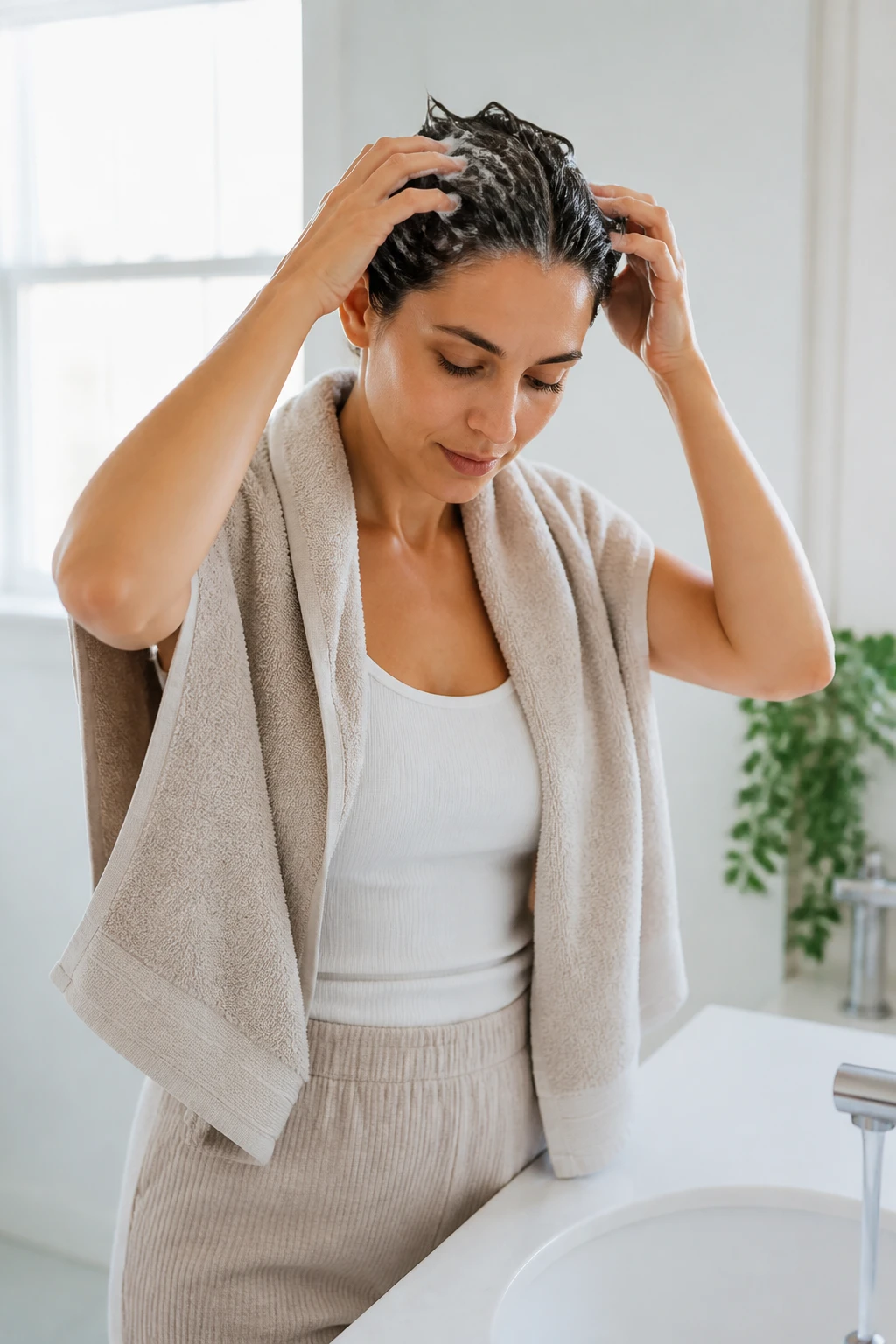
Use a gentle shampoo on the scalp and conditioner on the lengths. Wash with lukewarm water, never hot, and be especially careful with wet hair, which breaks most easily.
Pat with a soft towel instead of rubbing, and air-dry when you can. Every bit of friction you remove is length you keep.
Feed Growth From Within
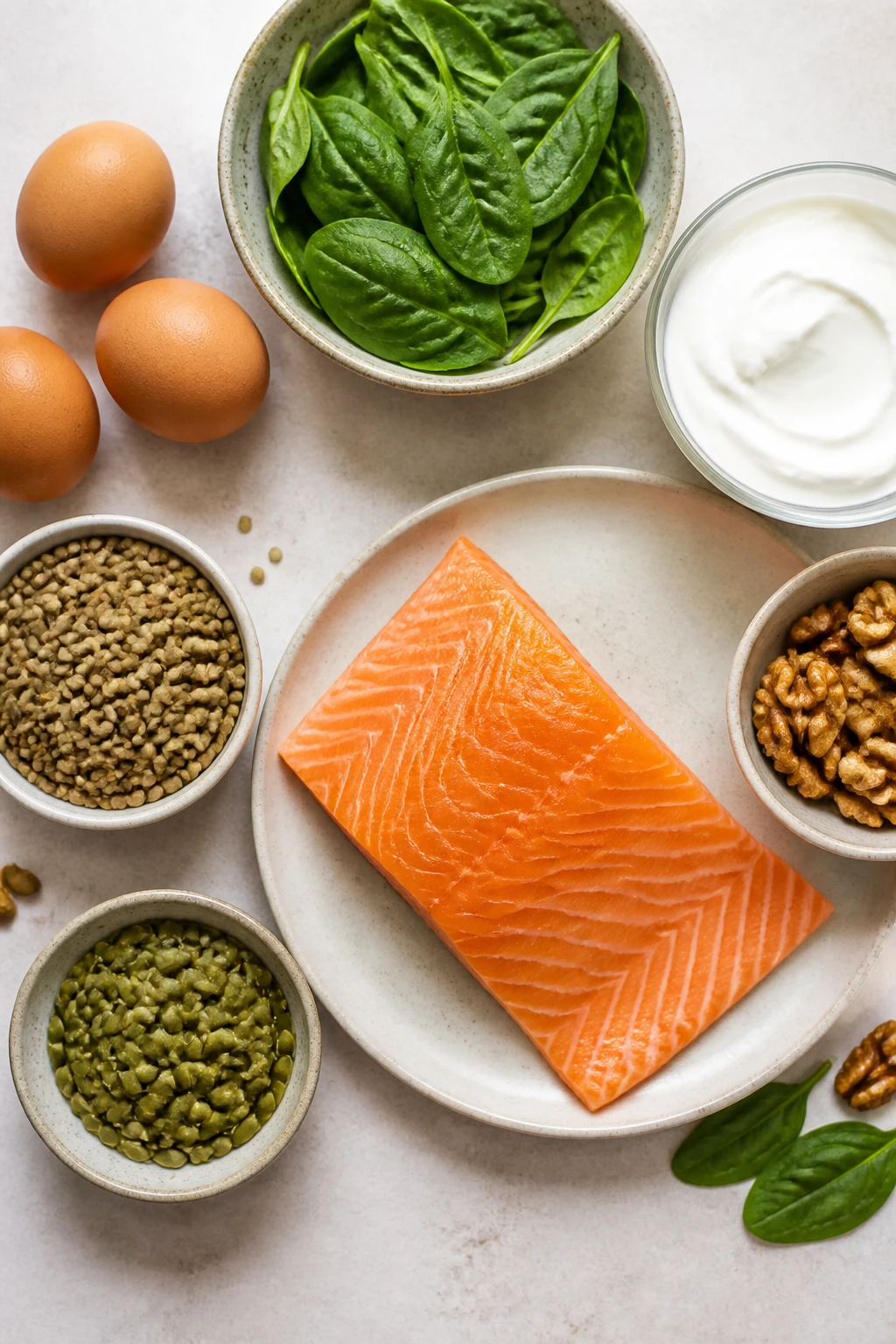
Hairfall is often the first visible sign of a nutritional gap. Follicles need steady protein and a few key minerals to stay in their growth phase.
| Nutrient | Why it helps | Good sources |
|---|---|---|
| Protein | Hair is mostly keratin; too little slows growth. | Eggs, fish, chicken, lentils, yogurt |
| Iron & ferritin | Low iron is a leading cause of shedding in women. | Spinach, red meat, lentils, pumpkin seeds |
| Zinc & biotin | Support the follicle and strand structure. | Nuts, seeds, eggs, chickpeas |
| Vitamin D & omega-3 | Linked to healthy growth cycles and scalp. | Salmon, sunlight, walnuts, fortified foods |
If shedding is heavy, ask your doctor for a simple blood test — iron, thyroid, and vitamin D are the usual culprits and are easy to correct.
Gentle Pre-Wash Treatments
An occasional pre-wash oil can strengthen the strand and soothe the scalp. Warm a little coconut, argan, or rosemary-infused oil, massage it in, leave it for 30 to 60 minutes, then shampoo out.
Trending Topics
Simple Outfits That Look Polished Without Trying Too Hardmay nail ideas That Look Polished Without Trying Too HardWhite Jeans Mom Outfits for Summer That Actually WorkWide Leg Jeans Fall Outfit Ideas for Work and WeekendsHow To Find Your Style And Dress With Easy ConfidenceKeep it to once or twice a week; more can leave the scalp greasy and need harsher washing.
Stress, Sleep, and Circulation
Stress is a genuine, well-documented trigger, often showing up two to three months after a difficult stretch. That delay is exactly why it is so easy to miss.
Protect your sleep, move your body for better circulation, and give any new routine two to three months before judging it. Hair works on a slow clock.
Hormonal Hairfall: Postpartum, PCOS, and Thyroid
Hormones drive some of the most common shedding. Postpartum shedding is normal and usually settles within a year. PCOS and thyroid imbalances can cause ongoing thinning and deserve medical input.
If your shedding lines up with a hormonal change, home care still helps — but pairing it with a doctor’s advice gets results faster.
Your Simple 30-Day Routine
Consistency beats intensity. Here is an easy month to follow.
| Week | Focus |
|---|---|
| Week 1 | Loosen styles, switch pillowcase, start a daily 2-minute scalp massage. |
| Week 2 | Settle into a gentle wash routine and add one pre-wash oil treatment. |
| Week 3 | Tidy up nutrition: protein at every meal, iron-rich foods, more water. |
| Week 4 | Review, book a blood test if shedding is still heavy, and keep going. |
Photograph your part and hairline on day one so you can actually see progress, instead of quitting at week three.
When Home Care Is Not Enough
See a doctor or dermatologist if you notice bald patches, a rapidly widening part, hair coming out in clumps, or shedding that lasts beyond three to six months.
These can point to treatable medical causes, and the sooner they are addressed, the more hair you keep.
The Bottom Line
Most everyday hairfall improves when you calm the scalp, handle hair gently, eat well, and manage stress — then give it time.
Stay patient and consistent for a couple of months, and watch for short baby hairs along your hairline: the first real sign your routine is working.

I am Sofia Bennett, the editor behind VFB Style and a mum of three. I share wearable outfit ideas, seasonal styling tips and practical fashion inspiration for real everyday life from real life fashion trends.